"Free" is the most expensive word in print on demand.
Every platform will tell you it's free to start. They're not lying. You won't pay a dime to sign up, upload designs, or list products. But the moment a customer buys, the platform takes its cut. And depending on where you're selling, that cut ranges from reasonable to brutal.
We've watched sellers chase "free print on demand" platforms for years, only to realize six months in that their margins were so thin they were basically volunteering. The platform you choose determines whether you keep 20% or 60% of every sale. That's not a small difference when you're pushing hundreds of orders a month.
So let's break this down honestly. What's actually free, what's not, and where the smart money goes in 2026.
What Is Free Print on Demand?
The "free" part refers to getting started. No monthly fees. No minimum orders. No warehouse full of unsold inventory. You design, you list, you wait for sales. When someone buys, the platform prints the product, ships it to the customer, and charges you the production cost. Your profit is whatever you set as the retail price minus that production cost.
This model eliminated the biggest barrier to starting a product business. But "free to start" and "free to run profitably" are two very different things. The platforms make their money on production margins, and some are far more generous than others.
The 5 Best Free Print on Demand Sites in 2026
Not all free POD platforms are built the same. Here's what actually matters when you're comparing them: base production costs, product range, where your customers come from, and how much control you have over pricing.
Printify
Printify is the go-to for sellers who want the lowest possible base prices. Their marketplace model connects you to dozens of print providers competing for your business, which drives costs down. A basic unisex t-shirt runs $5.50-$7.00, compared to $8+ on most competitors.
The free plan gives you unlimited designs and up to 5 connected stores. You can sell on Etsy, Shopify, WooCommerce, and more. The catch? Their Premium plan ($29.99/month) unlocks up to 20% off those already-low base prices. At scale, that savings pays for itself fast.
We wrote a full breakdown in our Printify review if you want the deep dive.
Printful
Printful charges more per product but delivers higher print quality and branding options. Their base prices for a standard tee sit around $8.50-$12.00, which eats into margins, but the print quality and packaging are noticeably better.
Printful's real advantage is custom branding. Inside labels, pack-ins, branded packing slips - if you're building a brand (not just flipping designs), this matters. Their free plan covers everything except their premium design tools.
Check our Printful review for the full comparison.
Want to do this yourself? Merch Titans automates the entire process.
Amazon Merch on Demand
Amazon Merch is the closest thing to truly free print on demand. No production costs upfront. No shipping to handle. No customer service. Amazon does everything. You upload a design, set a royalty, and collect checks.
The royalty structure is straightforward: you earn a fixed percentage per sale based on your list price. A $19.99 t-shirt earns roughly $5.23 in royalty. Not amazing, but you're getting access to 300+ million Prime shoppers with zero marketing spend.
The downside? You need to apply and get accepted. And you start at Tier 10, meaning you can only have 10 live designs. Scaling requires sales, patience, and understanding how to move up tiers quickly.
Redbubble
Redbubble is a marketplace where you upload art and they handle everything else. Zero cost, zero effort beyond the design itself. The platform sets base prices, and you add a markup percentage as your profit.
The default markup is 20%, which translates to roughly $3-$4 per t-shirt sale. You can increase it, but higher prices mean fewer sales on a marketplace where shoppers are price-sensitive.
Redbubble works best as a passive income channel, not a primary business. Upload your designs, set reasonable markups, and let the marketplace do its thing. Don't expect to build a brand here.
Gelato
Gelato's pitch is local production. They have print partners in 30+ countries, which means faster delivery times and lower shipping costs for international customers. The free plan is genuinely generous, with no limits on products or orders.
Base prices are competitive with Printify, and their automatic routing to the nearest print facility cuts shipping times significantly. If you're selling internationally, Gelato's local fulfillment network is the strongest free option available.

The Hidden Cost Nobody Talks About
Here's where the "free" narrative falls apart.
Every free platform takes a chunk of your sale through production costs. The cheaper the platform, the more you keep. The more premium the platform, the less margin you have to work with. And on marketplaces like Redbubble and Amazon Merch, you don't even control the retail price the same way.
A $19.99 t-shirt on Printify with a $5.50 base cost nets you $14.49. That same shirt on Printful at $12.00 nets you $7.99. Same design, same retail price, nearly double the profit. Multiply that across hundreds of sales and you're looking at thousands of dollars in difference.
This is why understanding your profit margins is more important than finding the "cheapest" platform. Cheap to join is irrelevant if every sale barely breaks even.
Why MyDesigns Wins on Margins
Every platform we've discussed so far puts a middleman between you and your customer. MyDesigns flips that model.
MyDesigns gives sellers full control over pricing, margins, and product types - including digital products - from a single storefront. Instead of competing on a marketplace where the platform dictates your economics, you own the customer relationship.
Here's what makes it different:
- Physical POD + digital products in one place. Sell t-shirts alongside design files, templates, or digital downloads. No other POD platform does both.
- Highest margins. You control every aspect of pricing. No marketplace taking 15-45% off the top.
- Brand ownership. Your storefront, your customers, your data. You're building an asset, not renting shelf space.
- No per-sale platform fees eating your margins. What you price is what you make (minus production costs for physical products).
For sellers who want to start a real print on demand business, not just upload designs and hope, MyDesigns is the platform that treats you like a business owner, not a content creator on someone else's marketplace.
Scale Your POD Business With the Right Tools
Merch Titans gives you keyword research, analytics, and automation tools built for serious sellers.
Get Started Today →14-day money-back guarantee · Used by 150,000+ sellers since 2018
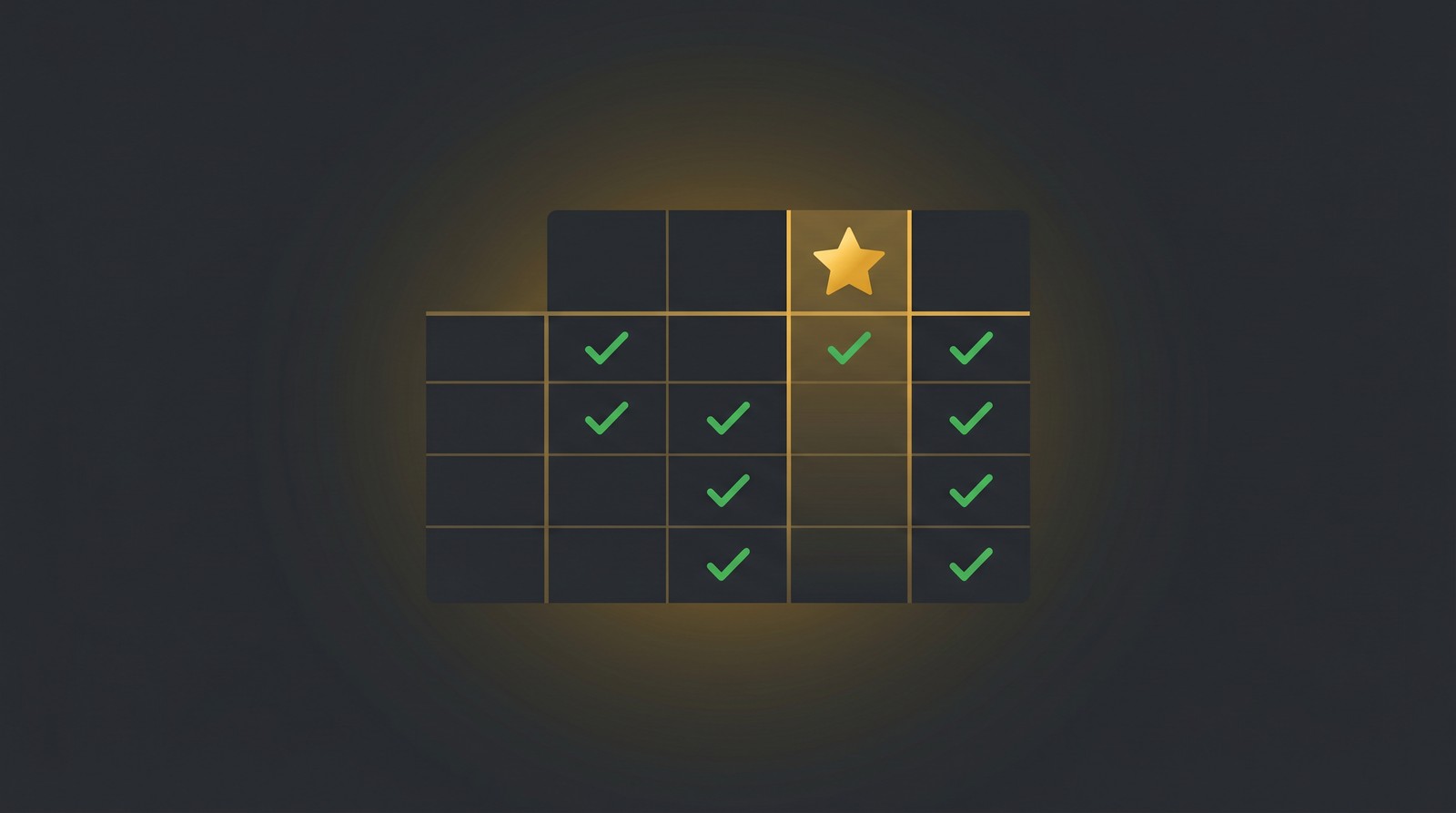
Free Print on Demand Platform Comparison
How to Actually Start Print on Demand for Free
Knowing which platforms are free is step one. Here's the exact playbook we'd follow if starting from zero today with no budget:
-
Pick your primary platform. If you want marketplace traffic, start with Amazon Merch on Demand (apply now - the waitlist takes weeks). If you want control, set up a MyDesigns storefront.
-
Stack a secondary platform. List the same designs on Printify connected to an Etsy shop. Two income streams from the same design work. Zero extra cost.
-
Research keywords before you design anything. This is where most free sellers waste time. They create what they think is cool, not what people are searching for. Use our free Amazon keyword research tool and Etsy keyword research tool to find what buyers actually want.
-
Create 10-20 designs in a proven niche. Don't scatter across 50 niches. Go deep in one. Occupation niches, hobby niches, and event-driven niches consistently perform. Need ideas? We have a full list of t-shirt design ideas to get you started.
-
Optimize every listing for search. Titles, tags, and descriptions stuffed with relevant keywords, not generic fluff. This is where free keyword tools give you an unfair advantage over sellers guessing at tags.
-
Scale what sells, kill what doesn't. After 30 days, look at your data. Double down on designs getting impressions and sales. Remove everything that isn't performing. Rinse and repeat.
Free Tools That Give You an Unfair Advantage
The platforms are free. The designs cost your time. But the biggest edge you can get, without spending a cent, is better data than your competitors.
Most POD sellers are guessing at keywords, niches, and trends. You don't have to. Merch Titans offers a suite of free research tools built specifically for print on demand sellers:
- Amazon Keyword Research - Find exactly what buyers search for on Amazon. Volume, competition, and trend data for every niche.
- Etsy Keyword Research - Same depth of data for the Etsy marketplace. Essential if you're selling through Printify + Etsy.
- Trademark Checker - Check your designs against trademark databases before you upload. One trademark violation can get your entire account banned.
These tools are 100% free. No account required. No credit card. Just data that helps you make smarter decisions about what to create and where to sell.
Want to do this yourself? Merch Titans automates the entire process.
The "Free Forever" Trap
Here's the contrarian take most POD content won't give you.
Staying on free plans forever is a growth ceiling, not a strategy. Free tiers exist to get you started. They work. But every hour you spend manually doing what automation handles in seconds is an hour you're not designing, researching, or scaling.
The math is brutal: if you earn $8 per sale and spend 15 minutes manually processing each listing, you're effectively earning $32/hour. An automation tool that publishes 100 listings while you sleep isn't an expense. It's a raise.
We built Merch Titans specifically because we hit this wall ourselves. Manual uploads, one-by-one keyword research, no analytics on what's actually working. The automation tools exist because the free-and-manual approach has a hard ceiling.
When you're ready to break through that ceiling, tools like Merch Titans (see pricing) give you bulk uploading, deep analytics, and automation that turns a side hustle into a real business. But start free. Prove the model. Then invest in speed.
What "Free" Should Actually Mean to You
Stop thinking about "free" as a permanent strategy. Think about it as a proving ground.
Free platforms let you validate your designs, test niches, and learn the mechanics of print on demand without risking a penny. That's genuinely powerful. But the sellers hitting $5K, $10K, $50K per month aren't on free plans anymore. They've graduated to tools and platforms that multiply their output.
The best free print on demand setup in 2026 is a MyDesigns storefront for maximum margins, Amazon Merch for passive marketplace traffic, and Merch Titans' free tools for keyword research. That combination costs you nothing to start and positions you to scale when the revenue justifies it.
The question isn't whether you can do print on demand for free. You absolutely can. The question is how long you'll stay on the free tier before the math tells you it's time to invest in yourself.
Merch Titans Automation
Ready to Scale Beyond Free?
Start with our free keyword research tools, then upgrade to full automation when your sales demand it.
14-day money-back guarantee · No contracts · Cancel anytime
Frequently Asked Questions
Is there a print on demand service that is free?
Every major print on demand platform is free to join - Printify, Printful, Gelato, Redbubble, and Amazon Merch on Demand all charge zero upfront fees. You only pay the base production cost when a customer orders, and your profit is the difference between your retail price and that production cost.
What is the cheapest print on demand service?
Printify consistently offers the lowest base prices because it connects you to a network of competing print providers, driving costs down. A standard t-shirt starts around $5.50-$7.00 on Printify compared to $8-$12 on Printful, giving you wider margins on every sale.
Can you do print on demand for free?
Starting a print on demand business costs nothing upfront on most platforms. You create designs, list products, and only pay production costs after a customer buys. The real expense is your time creating designs and optimizing listings - not platform fees.
Which print on demand has no upfront cost?
Printify, Printful, Gelato, Redbubble, and Amazon Merch on Demand all have no upfront costs. Amazon Merch is the most truly free option since it handles everything from printing to shipping to customer service, but requires an application and has strict tier limits.
Is Printify free to use?
Printify's free plan lets you create unlimited product designs and connect up to 5 stores. The free tier includes access to their full product catalog and print provider network. Their Premium plan at $29.99/month gives you up to 20% off production costs, which matters at scale.
What is the best free print on demand site?
MyDesigns is the best platform for sellers who want maximum control and margins, offering both physical POD products and digital downloads from one storefront. For pure marketplace exposure with zero effort, Amazon Merch on Demand gives you access to millions of Prime shoppers at no cost.