The low-content book market is not a secret anymore. But most sellers are still doing it wrong - uploading generic lined notebooks with stock art covers and hoping Amazon's algorithm delivers sales. That approach died in 2024.
The sellers pulling consistent revenue from print on demand notebooks in 2026 have figured out something simple: notebooks are not stationery products, they are niche tools. A "gratitude journal for new moms" outperforms a "beautiful floral notebook" by 10x because it solves a specific problem for a specific buyer.
What Are Print on Demand Notebooks?
You design a cover and interior layout, upload the files to a POD platform like Amazon KDP or Lulu, and every sale triggers automatic production and shipping. The entire business runs without you touching a physical product.
The category extends far beyond basic notebooks. Planners, trackers, logbooks, sketchbooks, composition books, and guided journals all fall under the print on demand notebook umbrella. Each sub-category attracts a different buyer with different willingness to pay.
Why Notebooks Are the Smartest Entry Point for POD Sellers
Notebooks require no design skills. A clean cover with good typography and a simple interior layout is all it takes. Compare that to t-shirt design where you compete against professional illustrators and AI-generated art flooding every niche.
The barrier to entry is lower, but the barrier to entry is not the same as the barrier to profit. The sellers making real money have moved beyond single notebooks into systems - building catalogs of 50-200 products across tightly related niches.
The Compounding Effect
Each notebook you publish is a permanent asset. Unlike social media content that disappears from feeds in hours, an Amazon KDP listing generates traffic for years. A seller with 100 well-optimized notebooks essentially owns 100 storefronts running 24/7 with zero maintenance costs.
Best Platforms for Selling Print on Demand Notebooks
Amazon KDP
Amazon KDP dominates the print on demand notebook market for one reason: traffic. Amazon processes over 2 billion visits per month, and a significant portion of notebook buyers start their search there. Listing is free, production costs are competitive, and Amazon handles all fulfillment.
The tradeoff is control. You cannot customize packaging, include inserts, or build direct customer relationships through KDP. But for pure volume, nothing beats it.
Etsy
Etsy is the second-strongest channel for custom notebooks. The platform's handmade-oriented audience pays premium prices for unique, niche-specific journals. Pair Etsy with a POD supplier like Lulu or Printful for fulfillment, or sell digital planner downloads alongside physical products.
Shopify + Lulu or Printful
A Shopify store with Lulu Direct or Printful integration gives you complete brand control. Custom packaging, email marketing sequences, and cross-selling capabilities make this the best option for building a recognizable notebook brand.
MyDesigns
MyDesigns is the strongest option for sellers who create both physical notebooks and digital planner PDFs. You can sell the physical POD notebook and the downloadable planner template from one storefront, capturing two revenue streams from every design.
Want to do this yourself? Merch Titans automates the entire process.
Designing Notebook Covers That Convert
Cover design is the single biggest factor in notebook sales. Buyers scrolling through Amazon results make split-second decisions based on the thumbnail. Here is what works.
Typography-Forward Covers
Clean, bold typography on a solid or subtle gradient background outperforms complex illustrated covers in most niches. The title must be readable at thumbnail size - if a buyer cannot read the title in Amazon search results, they scroll past.
Niche Signaling
The cover must instantly communicate who this notebook is for. A "Bird Watching Field Journal" with a simple bird silhouette and clear title sells better than a beautifully illustrated bird notebook with a generic "My Journal" title. Specificity sells.
Color Psychology
- Black/dark covers dominate the professional and productivity niche (planners, business journals)
- Earth tones perform well for wellness, mindfulness, and nature-related journals
- Bright, saturated colors work for children's notebooks and creative journals
- Pastels convert well for wedding planners, baby journals, and self-care trackers
Interior Design: Simple Beats Complex
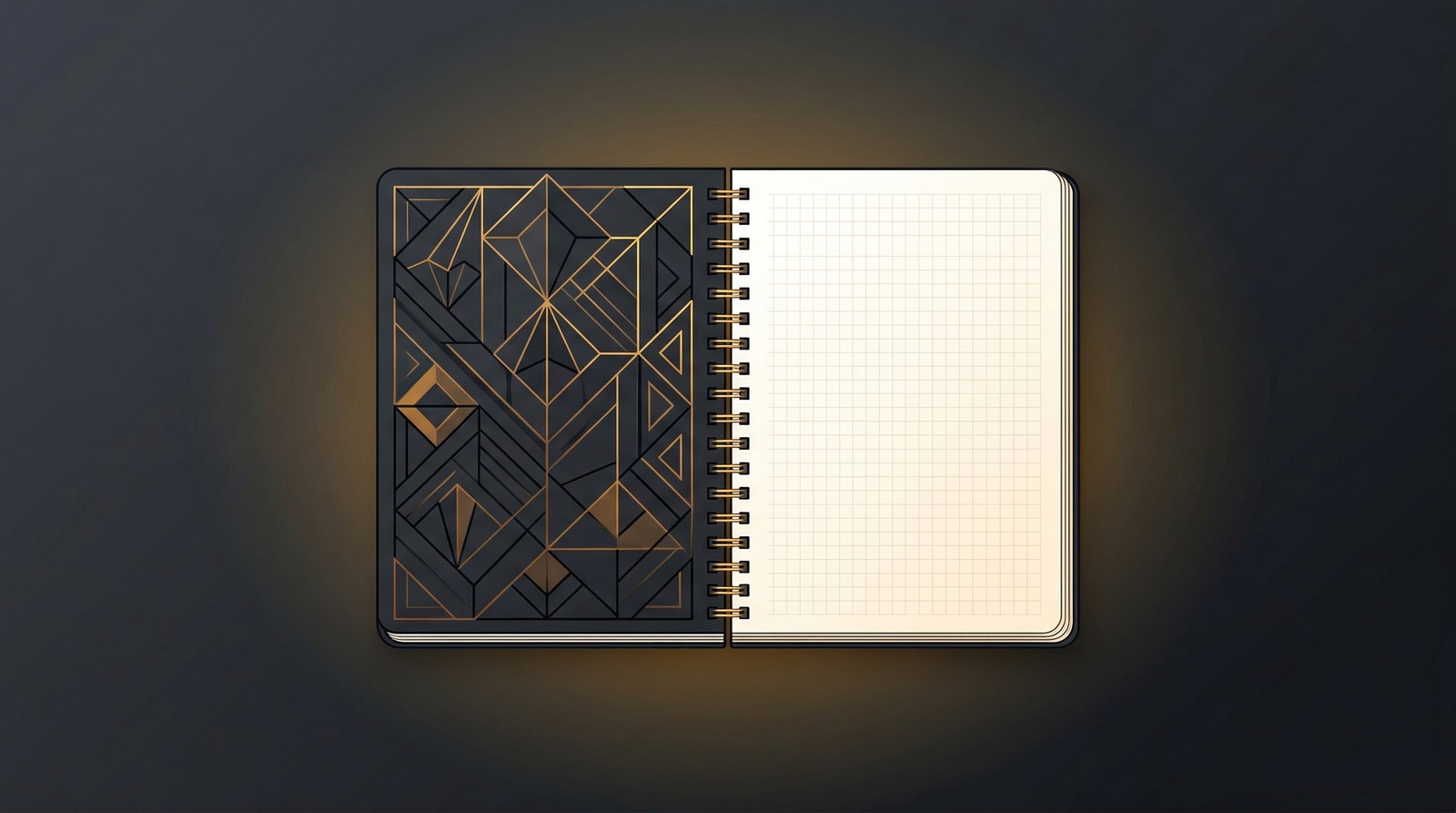
The interior is where most new sellers overthink the process. Complex layouts with custom graphics, elaborate headers, and decorative borders do not sell better than clean, functional interiors.
Interior Types That Sell
- Lined pages - the classic, works for general journals and writing notebooks
- Dotted grid - popular with bullet journal users, growing demand year over year
- Custom trackers - habit trackers, mood trackers, expense trackers targeted at specific niches
- Prompted journals - 1-2 prompts per page tailored to the niche (gratitude prompts, reflection questions)
- Combination interiors - weekly spreads mixing a calendar view, to-do section, and notes area
Focus your creative energy on the cover and niche selection. The interior needs to be functional, not beautiful. Tools like Canva and Affinity Publisher can produce professional interiors in under an hour per template.
Finding Profitable Notebook Niches
The difference between a notebook that sells 2 copies per month and one that sells 200 is niche selection. Generic notebooks compete against millions of listings. Niche-specific journals compete against dozens.
Niche Research Process
Use the Merch Titans keyword research tools to identify niches with search demand and low competition. Here is the process:
- Start with a broad hobby or interest category (fitness, gardening, cooking, travel)
- Search Amazon for "[category] journal" or "[category] planner" and note the top results
- Check search volume with a keyword research tool for variations like "[niche] tracker," "[niche] logbook," and "[niche] planner"
- Look for niches where top results have fewer than 500 reviews - that is your entry point
- Validate demand by checking if related products (books, courses, equipment) exist for the niche
High-Performing Notebook Niches in 2026
- Health and fitness: Workout trackers, meal planners, fasting journals, supplement logs
- Hobbies: Bird watching logs, wine tasting journals, fishing records, gardening planners
- Professional: Meeting notes for specific roles, project trackers, client management journals
- Life events: Pregnancy journals, retirement planners, wedding organizers, new homeowner checklists
- Mental health: Anxiety journals, CBT worksheets, therapy session trackers, gratitude journals
Find Winning Notebook Niches in Minutes
Merch Titans keyword tools show you exactly what buyers search for, so you can publish notebooks that match real demand.
Get Started Today →14-day money-back guarantee · Used by 150,000+ sellers since 2018
Pricing Your Print on Demand Notebooks
Notebook pricing depends on three variables: page count, cover type (softcover vs hardcover), and perceived niche value.
| Product Type | Production Cost | Recommended Price | Margin |
|---|---|---|---|
| Softcover 120-page lined | $3.00-$4.50 | $9.99-$14.99 | 50-65% |
| Softcover 200-page journal | $4.00-$5.50 | $12.99-$17.99 | 55-60% |
| Hardcover 150-page planner | $6.00-$8.00 | $19.99-$24.99 | 50-60% |
| Premium guided journal | $5.00-$7.00 | $16.99-$22.99 | 55-65% |
Price niche-specific journals 20-30% higher than generic notebooks. A "Sourdough Bread Baking Journal" commands $16.99 easily where a plain lined notebook struggles at $9.99. The niche targeting justifies the premium.
Scaling Beyond Your First 10 Notebooks
The Catalog Strategy
Build depth before breadth. Master one niche with 10-15 notebook variations before expanding to a new niche. A seller with 15 fitness-related notebooks and a recognizable brand outsells a seller with 15 random notebooks across unrelated niches.
Digital + Physical Bundle
Sell digital planner PDFs alongside physical notebooks. Digital products carry 90%+ margins and appeal to the growing audience using tablets like the iPad with Apple Pencil. MyDesigns lets you sell both from one storefront.
Cross-Platform Expansion
Every notebook design should be listed on Amazon KDP, Etsy, and your own Shopify store. Use Merch Titans for keyword optimization across platforms, and allocate your marketing budget to whichever channel delivers the lowest customer acquisition cost.

Seasonal and Event-Based Publishing
Plan your publishing calendar around predictable demand spikes. Academic planners launch in June-July. Fitness journals spike in December-January. Wedding planners sell strongest February through May. Publishing 4-6 weeks before peak season gives your listings time to build sales velocity.
The Biggest Mistake Notebook Sellers Make
They treat each notebook as an isolated product instead of part of a system. The sellers earning $5,000+ monthly from notebooks have built interconnected catalogs where each product drives discovery of the next. They use Amazon keyword research to find gaps, publish in clusters, and optimize listings based on data rather than intuition.
Merch Titans Automation
Build Your Notebook Empire with Real Data
Merch Titans gives you the keyword insights and automation tools to publish notebooks that rank and sell across every marketplace.
14-day money-back guarantee · No contracts · Cancel anytime
The notebook market rewards consistency over creativity. Publish 5-10 well-researched, niche-targeted notebooks per month, optimize based on sales data, and within 6-12 months you will have built a catalog that generates revenue whether you are working or not. That is the real promise of print on demand notebooks - not overnight success, but a compounding asset that pays you back for years.
Frequently Asked Questions
How much does it cost to make a print on demand notebook?
Production costs for print on demand notebooks range from $3-$7 depending on page count, cover type, and supplier. A standard 120-page softcover notebook costs approximately $3.50-$4.50 through major POD suppliers like Lulu or Amazon KDP.
Can you sell print on demand notebooks on Amazon?
Amazon KDP (Kindle Direct Publishing) is the largest marketplace for print on demand notebooks and journals. Sellers upload interior and cover files, set pricing, and Amazon handles printing, shipping, and customer service with zero upfront cost.
What type of notebooks sell best on print on demand?
Niche-specific journals outperform generic notebooks by a wide margin. Fitness trackers, gratitude journals, pregnancy planners, and hobby-specific logbooks (bird watching, wine tasting, gardening) generate the highest sales because buyers search for solutions to specific needs.
Do you need to write content for print on demand notebooks?
Most profitable POD notebooks contain minimal text. Lined, dotted, or grid pages with simple headers, trackers, or prompts are all that is needed. The cover design and niche targeting drive sales, not interior complexity.
How much money can you make selling print on demand notebooks?
Successful notebook sellers on Amazon KDP earn $500-$5,000 monthly from a catalog of 50-200 notebooks. Top performers with established brands and hundreds of niche-specific designs report $10,000+ monthly revenue across multiple platforms.