Every POD seller and their cousin is selling t-shirts. That market is a bloodbath of $19.99 tees with razor-thin margins. Meanwhile, custom shoes sit at $70-$100+ per pair with competition levels that feel like 2018 era POD.
Print on demand shoes represent the highest-margin, lowest-competition product category most sellers completely ignore. The production technology has matured, the supplier network has expanded, and buyers are actively searching for custom footwear they cannot find at Foot Locker.
We tracked POD shoe sellers throughout 2025, and the margins tell the story: average profit per sale of $25-$50 on shoes versus $5-$12 on t-shirts. You need to sell 4-5 shirts to match one pair of shoes.
What Are Print on Demand Shoes?
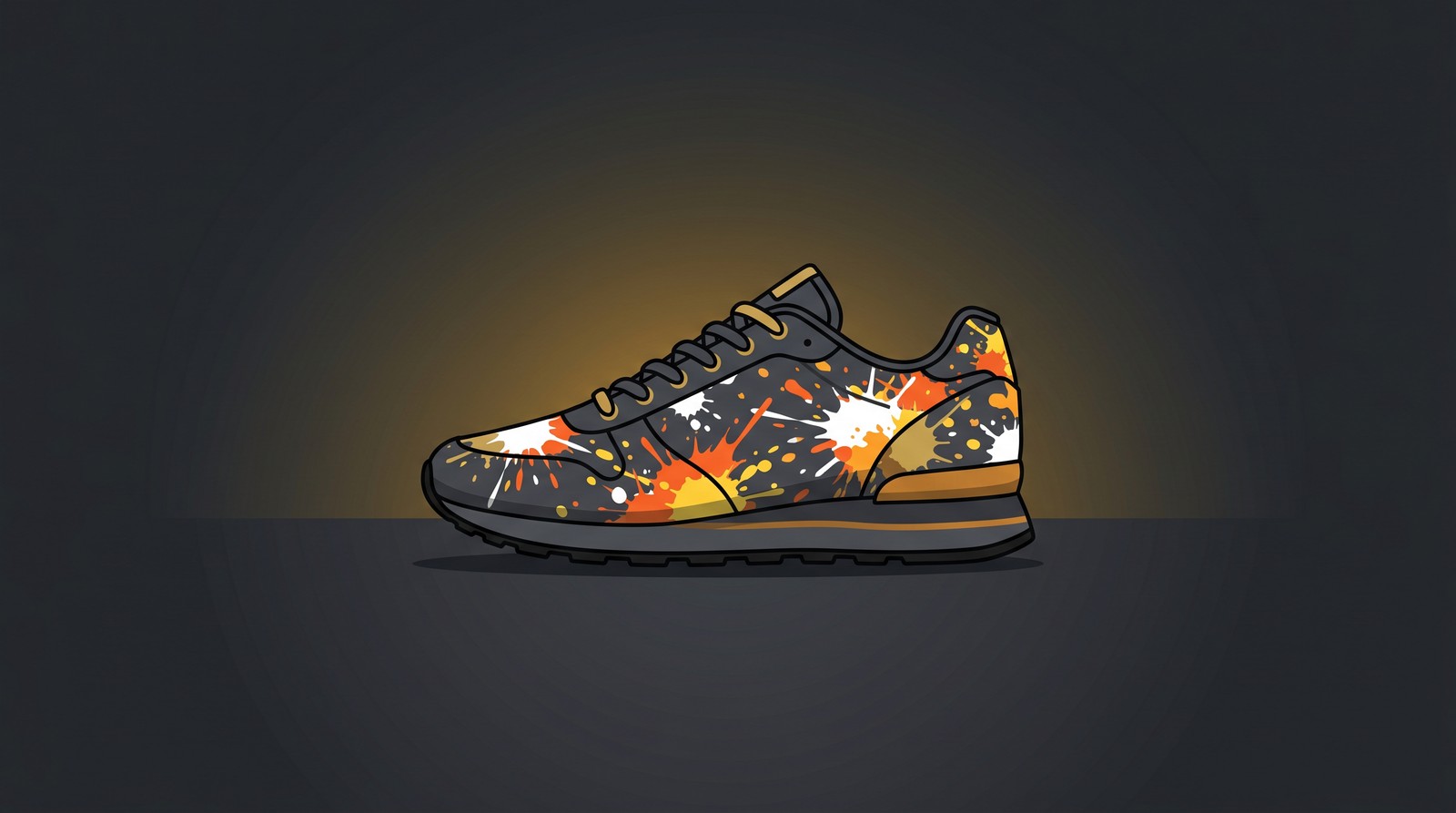
The technology works similarly to apparel POD but uses sublimation printing on canvas, mesh, and synthetic materials. The print wraps around the entire upper portion of the shoe, creating an all-over design that is far more visually impactful than a chest print on a t-shirt.
This is not iron-on or screen printing. Modern POD shoe printing is durable, waterproof in most cases, and holds up to normal wear patterns.
Why Shoes Beat T-Shirts for POD Profit
Let us compare the economics side by side.
| Metric | T-Shirts | Shoes |
|---|---|---|
| Average retail price | $22-$30 | $65-$100 |
| Base production cost | $8-$14 | $18-$35 |
| Average profit per sale | $8-$15 | $30-$55 |
| Market saturation | Extremely high | Low |
| Design surface area | Front/back chest | Full 360° wrap |
| Customer perceived value | Commodity | Premium product |
The math is straightforward: fewer sales, more profit per sale, less competition. A seller moving 5 pairs of shoes per day earns more than a seller moving 15 shirts per day, with significantly less customer service volume.
Want to do this yourself? Merch Titans automates the entire process.
Best Print on Demand Shoe Types to Sell
Canvas Sneakers (Best for Beginners)
Canvas sneakers are the t-shirt equivalent of the shoe world. Lowest base cost ($15-$22), largest print area, and broadest audience appeal. Every POD shoe seller should start here.
Why they work: The flat canvas material produces crisp, vibrant prints. The casual style fits every demographic from teens to middle-aged buyers. And the $55-$75 retail sweet spot feels accessible while maintaining strong margins.
Slip-On Shoes
Slip-ons require no lacing decisions or sizing complexity. They are the fastest purchase decision for buyers and the easiest to design because the flat upper canvas is essentially a blank canvas.
Target audiences: Artists, casual professionals, beachgoers, festival attendees, and anyone who values convenience.
High-Top Sneakers
Higher price point ($75-$100 retail), higher margins, and a dedicated audience of sneaker enthusiasts who collect unique designs. The high-top silhouette also provides more design real estate than low-tops.
Running Shoes and Athletic Footwear
The highest price point ($90-$120 retail) and highest perceived value. These require mesh-compatible printing and more precise sizing. Not recommended for beginners, but the profit per sale is exceptional.
Boots and Winter Footwear
Seasonal but high-converting. Custom printed boots retail at $80-$130 and appeal to fashion-forward buyers and niche communities (hiking, motorcycle, festival culture).
Top Print on Demand Shoe Suppliers
JetPrint
JetPrint is the dedicated footwear POD specialist. They offer the widest selection of shoe types (sneakers, slip-ons, boots, sandals, running shoes) and integrate directly with Shopify and WooCommerce.
Pros: Largest shoe catalog, reasonable base prices, customizable shoe components (soles, laces, tongue) Cons: Longer shipping times (7-15 days), limited direct marketplace integrations
Printify Shoe Suppliers
Printify connects to multiple shoe printing partners through their marketplace model. The advantage is the familiar Printify interface that integrates with virtually every ecommerce platform.
Pros: Easy integration if you already use Printify for other POD products, multiple supplier options for price comparison Cons: Supplier quality varies, fewer shoe types than dedicated providers
Inkedjoy
Inkedjoy specializes in all-over-print products including shoes. Their shoe quality has received positive reviews, and their pricing sits in the mid-range.
Pros: Good print quality, competitive pricing, decent product range Cons: Newer company, smaller support team
Swagify
Swagify focuses on premium custom merchandise including shoes. Higher base costs but higher quality output. Best for sellers targeting the premium market.
Pros: Premium quality, branding options, good for high-end custom shops Cons: Higher base costs, fewer budget-friendly options
Designing for Shoes vs. Designing for Shirts
Shoe design is fundamentally different from apparel design. The surface curves, the print area wraps 360 degrees, and the design needs to look good from every angle.
Design Rules for POD Shoes
-
Use seamless patterns and all-over prints. Designs that tile seamlessly create the most professional-looking shoes. Abstract patterns, floral repeats, and geometric tessellations work exceptionally well.
-
Consider the 3D surface. A design that looks perfect flat may distort at the toe box or heel. Most suppliers provide mockup templates showing the exact print area. Use them religiously.
-
Color matters more on shoes. Shoes get seen up close and in motion. Muddy colors or low-contrast designs disappear. Use high-contrast color combinations and bold patterns that read from a distance.
-
Design the whole shoe. Top-down view, side views, heel view - buyers evaluate shoes from multiple angles. Your design needs to work from every perspective.
AI-Generated Shoe Designs
AI design tools can generate seamless patterns at incredible speed. Use tools like Midjourney or DALL-E to create base patterns, then refine them for shoe template specifications. The key is generating tileable, seamless outputs that wrap cleanly around the shoe surface.
Research Shoe Niches With Merch Titans
Find profitable keywords and untapped design niches for custom footwear using our research tools.
Get Started Today →14-day money-back guarantee · Used by 150,000+ sellers since 2018
Best Niches for Print on Demand Shoes
Art and Abstract Patterns
Abstract art shoes have the broadest appeal and the lowest risk of trademark issues. Watercolor effects, geometric patterns, and painterly textures are consistently top sellers.
Pet and Animal Designs
Custom pet-themed shoes (dog breeds, cat illustrations, wildlife art) tap into a passionate buyer segment that gladly pays premium prices. Dog breed-specific shoes are particularly strong sellers.
Pop Culture and Fandom (Be Careful)
Massive demand exists for fandom-related shoes, but trademark and copyright risks are serious. Only create original fan art that does not directly copy copyrighted characters, logos, or imagery. Use our trademark checker before listing anything in this space.
Niche Community Designs
Nurses, teachers, firefighters, gamers, musicians - every professional or hobby community wants custom shoes that represent their identity. These niches have smaller audiences but dramatically higher conversion rates and willingness to pay premium prices.
Seasonal and Holiday
Holiday-themed shoes (Christmas, Halloween, Valentine's Day) follow predictable seasonal demand curves similar to seasonal t-shirt strategies. The longer production and shipping times for shoes mean listing 8-10 weeks before the holiday is essential.
Selling Custom Shoes: Platform Strategy
Shopify (Recommended Primary)
Shopify print on demand is the best platform for custom shoes because of the visual storefront capabilities. Shoes are a visual product that benefits from high-quality lifestyle photography and detailed product pages that marketplaces cannot match.
Etsy
Etsy works well for custom shoes targeting the handmade and artisan market. "Custom designed shoes" and "hand-painted style sneakers" resonate with Etsy buyers who value uniqueness.
Your Own Store via MyDesigns
MyDesigns gives you the highest margins because you control the entire customer experience. For premium products like shoes where margins are already strong, maximizing per-sale profit matters. Pair shoe sales with digital products like matching phone wallpapers or art prints to increase average order value.

Pricing Strategy for POD Shoes
Price based on perceived value, not cost-plus. Custom shoes are a premium product, and buyers expect to pay premium prices.
| Shoe Type | Base Cost | Recommended Retail | Profit |
|---|---|---|---|
| Canvas Sneakers | $18-$22 | $59-$75 | $37-$57 |
| Slip-Ons | $15-$20 | $49-$65 | $29-$49 |
| High-Tops | $22-$28 | $75-$95 | $47-$73 |
| Running Shoes | $30-$40 | $89-$120 | $49-$90 |
| Boots | $35-$45 | $89-$130 | $44-$95 |
Handling Returns and Sizing
Shoes have higher return rates than apparel due to sizing issues. Mitigate this proactively:
- Include a detailed size chart on every listing with centimeter measurements
- Recommend sizing up for wide feet (mention this in the product description)
- Show the shoe on different foot types if possible via mockup variations
- Set clear return policies before you get your first return
Return rates for well-described POD shoes typically run 8-12%, compared to 5-8% for apparel. The higher profit margin per unit more than absorbs this.
The Underrated Advantage: Less Competition, More Visibility
Here is the real argument for print on demand shoes. Run a search for "custom printed t-shirts" and you find millions of listings. Run a search for "custom printed sneakers" and the results are thin.
The shoe category is where POD t-shirts were in 2017 - early enough to establish dominant positions. Sellers who build shoe catalogs now are establishing search authority, accumulating reviews, and building brand recognition before the inevitable influx of competition arrives.
The technology is proven. The suppliers are reliable. The margins are excellent. The only question is whether you move now or wait until the opportunity looks like the t-shirt market.
Merch Titans Automation
Expand Beyond T-Shirts With Merch Titans
Research high-margin product niches, find winning keywords, and scale your POD business across every product category.
14-day money-back guarantee · No contracts · Cancel anytime
The POD sellers making the most money in 2026 are not fighting over t-shirt margins. They are selling products with higher perceived value, lower competition, and better economics. Custom shoes check every box.
Start with 10 canvas sneaker designs. Order samples. Validate the quality. Then scale into the most underserved product category in print on demand.
Frequently Asked Questions
How much do print on demand shoes cost to produce?
Print on demand shoes typically cost $15 to $45 to produce depending on the shoe type and supplier. Canvas sneakers sit at the lower end around $15 to $25, while custom running shoes and boots range from $30 to $45. This leaves significant profit margins at retail prices of $60 to $120.
What type of shoes can you print on demand?
The most common print on demand shoe types include canvas sneakers, slip-ons, high-tops, running shoes, boots, sandals, and flip-flops. Canvas sneakers and slip-ons are the most popular because they offer the largest printable surface area and the lowest base costs.
What are the best print on demand shoe suppliers?
JetPrint, Printify (through partner suppliers), Inkedjoy, and Swagify are the leading print on demand shoe suppliers. JetPrint specializes exclusively in footwear and offers the widest shoe selection, while Printify provides the easiest integration with existing ecommerce stores.
Are print on demand shoes good quality?
Quality varies significantly between suppliers, but top-tier POD shoe providers produce footwear comparable to mid-range retail brands. Always order samples before selling to the public, as print placement, sole comfort, and sizing accuracy differ between suppliers.
Can you sell custom shoes on Etsy or Shopify?
Both Etsy and Shopify support print on demand shoe sales. Shopify integrates directly with POD shoe suppliers through apps like Printify and JetPrint, while Etsy sellers can use third-party integrations to fulfill custom shoe orders automatically.