Most print on demand sellers are still spending 30-60 minutes per design. They're tweaking vectors in Illustrator, hunting for freelancers on Fiverr, or worse - buying generic template packs that 500 other sellers already uploaded. Meanwhile, a growing segment of sellers is quietly pushing 100+ original designs per day using AI t-shirt design generators that didn't exist two years ago.
The gap between these two groups is widening fast. The sellers using AI design tools aren't just saving time - they're fundamentally changing the economics of print on demand.
What Is an AI T-Shirt Design Generator?
These tools use diffusion models (the same technology behind Midjourney and DALL-E) trained on millions of images to produce original artwork from text descriptions. You type something like "retro sunset with palm trees, vintage distressed style, transparent background" and get a print-ready design in under a minute.
The technology has matured dramatically since early 2024. Current generators handle typography, transparent backgrounds, and print-specific formatting that earlier versions butchered completely.
Why AI Design Generators Changed the POD Game
The old print on demand playbook was simple: find a niche, hire a designer (or learn Photoshop yourself), create 5-10 designs, upload, wait. The bottleneck was always design creation.
AI removes that bottleneck entirely. Here's what that means in practice:
- Volume play becomes viable. Instead of 10 designs per week, you're creating 50-100 per day. More designs means more at-bats, which means more winners.
- Testing costs drop to zero. You can test 20 variations of the same concept without paying a designer for each revision.
- Niche entry speed explodes. Spot a trending niche on Monday, have 30 designs uploaded by Tuesday.
- Design iteration gets instant. Don't like the color palette? Regenerate. Want a different style? Change one word in the prompt.
The Best AI T-Shirt Design Generators Ranked
We've tested every major AI t-shirt design generator on the market. Here's what actually works for print on demand sellers - not hobbyists, not artists, but people trying to make money selling shirts.
1. Midjourney - The Quality King
Midjourney consistently produces the most marketplace-ready designs. The illustration quality, color accuracy, and style consistency are a step above everything else.
Best for: High-quality illustrations, vintage/retro styles, detailed artwork
Pricing: $10/month (Basic), $30/month (Standard - recommended for POD sellers)
Strengths:
- Best overall image quality and coherence
- Excellent at vintage, retro, and illustrated styles that sell well on Amazon Merch
- Strong community sharing prompts and techniques
- V6.1 handles text-on-designs better than any competitor
Weaknesses:
- Discord-based interface has a learning curve
- No transparent background natively (requires post-processing)
- No free tier
2. DALL-E 3 (via ChatGPT) - The Easiest Entry Point
DALL-E 3 integrated into ChatGPT is the fastest path from idea to design. You can have a conversation about what you want, iterate naturally, and get surprisingly good results.
Best for: Beginners, quick concept testing, text-heavy designs
Pricing: Included with ChatGPT Plus ($20/month)
Strengths:
- Conversational interface removes the prompting learning curve
- Native transparent background support
- Surprisingly good at incorporating text into designs
- Can generate designs in specific dimensions
Weaknesses:
- Quality ceiling lower than Midjourney for complex illustrations
- Usage limits on generation volume
- Less stylistic control than dedicated tools
3. Leonardo AI - The Volume Machine
Leonardo AI is purpose-built for creators who need high-volume output. The free tier is genuinely useful, and the paid plans support the kind of batch generation POD sellers need.
Best for: High-volume generation, consistent style across collections, budget-conscious sellers
Pricing: Free (150 tokens/day), $12/month (Apprentice), $30/month (Artisan)
Strengths:
- Free tier actually works for testing
- Excellent model fine-tuning for consistent brand aesthetics
- Canvas editor for post-generation tweaks
- Transparent background support built in
Weaknesses:
- Learning curve with model selection
- Free tier quality lower than paid
- Can produce overly smooth, "AI-looking" output without careful prompting
4. Kittl AI - Built for Print
Kittl is the only generator on this list specifically built for print-on-demand and apparel design. It combines AI generation with professional design tools in one workflow.
Best for: Sellers who want finished, upload-ready designs without post-processing
Pricing: Free (limited), $15/month (Pro)
Strengths:
- Designs come out print-ready with proper resolution
- Built-in mockup generator
- Text and typography tools integrated
- Templates specifically for t-shirts, hoodies, and apparel
Weaknesses:
- AI generation quality below Midjourney
- Smaller community and fewer prompt resources
- Limited free tier
Want to do this yourself? Merch Titans automates the entire process.
The Prompting Formula That Actually Sells Shirts
Bad prompts produce bad designs. Most sellers type something vague like "cool t-shirt design with a skull" and wonder why the output looks generic. The difference between a design that sells and one that doesn't often comes down to prompt engineering.
Here's the formula we use:
[Art Style] + [Subject] + [Mood/Aesthetic] + [Color Specification] + [Technical Requirements] + [Negative Prompts]
Real Examples That Work
Vintage/Retro (highest-selling style on Amazon Merch):
retro vintage distressed illustration of a fishing boat at sunset,
faded colors, worn texture, screen-print style, transparent background,
vector art, t-shirt design, no background elements
Minimalist (strong Etsy performer):
minimalist single-line continuous drawing of a mountain landscape,
black ink on white, simple clean design, t-shirt ready,
transparent background, no shading no gradients
Typography-Forward (trending on all platforms):
bold retro typography reading "Weekend Warrior" with small
mountain icon, vintage badge style, distressed texture,
limited color palette 3 colors, transparent background
Prompting Rules
- Always specify "transparent background" unless your design is full-bleed
- Include "t-shirt design" or "print-ready" to orient the AI toward apparel
- Name the exact art style - "watercolor," "vector," "retro vintage," "line art"
- Limit colors - specify "3-color palette" or "single color" for designs that actually print well
- Use negative prompts - "no realistic faces, no photographic elements, no gradients"
Post-Processing: From AI Output to Upload-Ready Design
Raw AI output is rarely upload-ready. Here's the production pipeline that takes you from generation to listing in minutes:
- Generate the base design using your AI tool of choice
- Remove background if not already transparent (remove.bg or Canva's background remover)
- Upscale to meet platform requirements (minimum 4500x5400 for Amazon Merch)
- Clean up artifacts - check edges, remove unwanted elements
- Export as PNG with transparency at the required dimensions
- Upload using Merch Titans bulk upload tools to push to multiple platforms simultaneously
The entire process takes 3-5 minutes per design once you have a system. Compare that to 30-60 minutes for traditional design creation.
Resolution Requirements by Platform
| Platform | Minimum Size | Recommended |
|---|---|---|
| Amazon Merch | 4500×5400 px | 4500×5400 px |
| Etsy POD | 4000×4000 px | 4500×5400 px |
| Redbubble | 2400×3200 px | 4500×5400 px |
| TeePublic | 2000×2000 px | 4500×5400 px |
Upload AI Designs to Every Platform in Minutes
Merch Titans' bulk upload tools push your AI-generated designs to Amazon, Etsy, Redbubble, and more - simultaneously.
Get Started Today →14-day money-back guarantee · Used by 150,000+ sellers since 2018
Common Mistakes That Kill AI T-Shirt Sales
We've reviewed thousands of AI-generated listings across Amazon Merch, Etsy, and Redbubble. These mistakes show up repeatedly in designs that don't sell:
1. The "Obviously AI" Look
Overly smooth gradients, perfect symmetry, and that unmistakable Midjourney glow. Buyers are getting better at spotting AI art. Add distressed textures, grain, and imperfections to make designs feel handcrafted.
2. Ignoring Print Limitations
AI generates gorgeous designs with 50 colors and subtle gradients. Those designs look terrible on a t-shirt. Simplify color palettes to 3-6 colors and avoid fine details that disappear at print size.
3. No Keyword Research Before Designing
Generating random designs and hoping they sell is a lottery ticket strategy. Use Amazon keyword research to find what people actually search for, then create designs that match that demand.
4. Copy-Paste Prompts Without Customization
Copying someone else's viral Midjourney prompt gives you a design that looks like everyone else's. Modify prompts to target your specific niche and add unique style elements that differentiate your listings.
The Contrarian Take: AI Won't Replace Good Taste
Here's what the "AI will replace designers" crowd gets wrong. The technology doesn't eliminate the need for creative judgment. It eliminates the need for technical execution.
Knowing what sells is still the hard part. AI can generate 1,000 skull designs in a day. Knowing which skull aesthetic resonates with motorcycle enthusiasts versus metal fans versus tattoo culture - that's where the money is.
The sellers crushing it with AI aren't the ones generating the most designs. They're the ones with the best niche research, the strongest keyword strategies, and the discipline to test systematically rather than spray randomly.
AI is a force multiplier. It multiplies whatever strategy you feed it. Feed it a bad strategy, and you get bad results faster. Feed it solid market research and proven niche data, and you build a print on demand empire.
Building a System: AI Design + Automation Stack
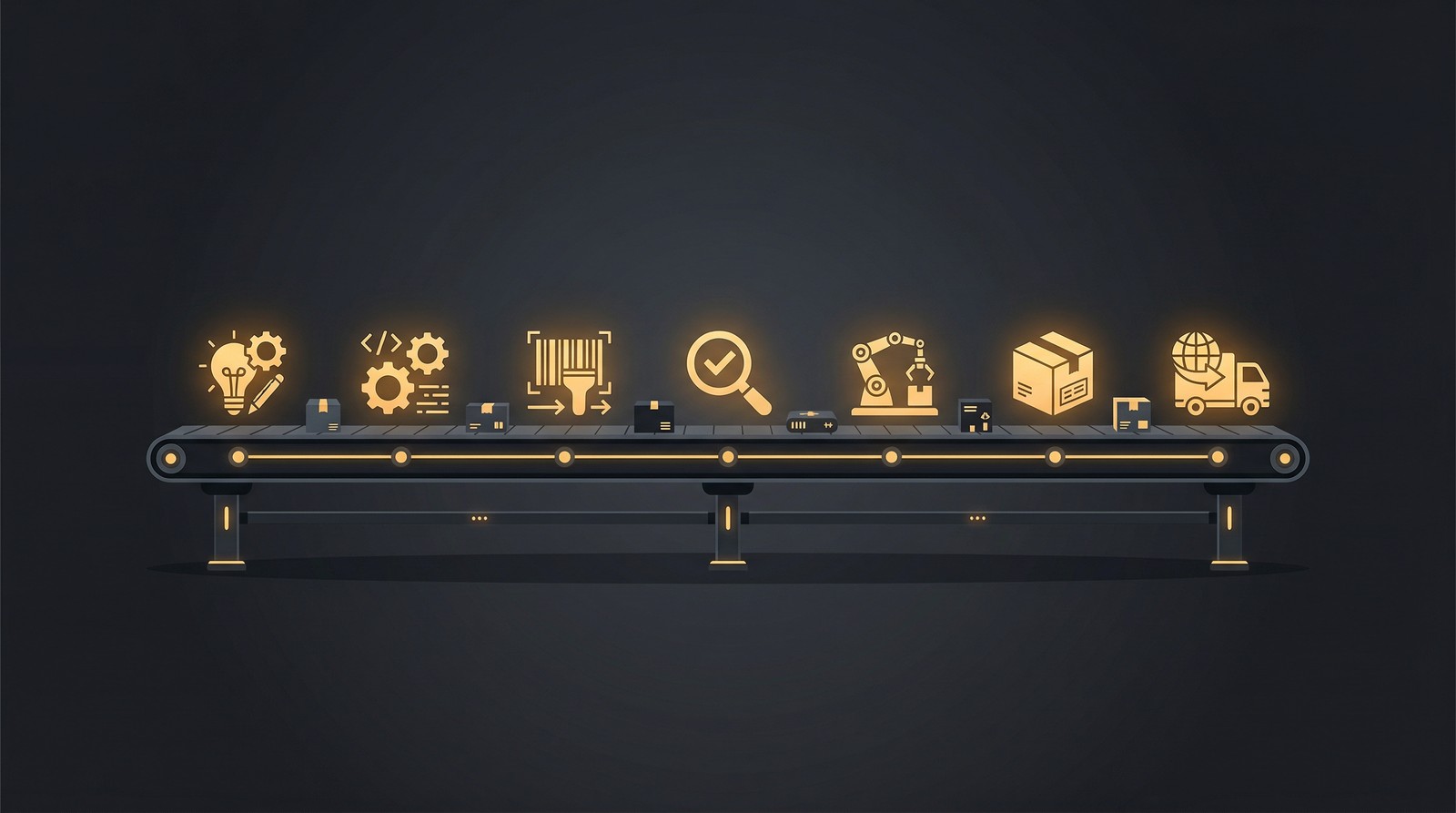
The real power move isn't using an AI generator in isolation. It's building a complete system where AI handles design, automation handles uploads, and data handles decisions.
Here's the stack that top POD sellers are running in 2026:
- Research - Merch Titans keyword tools + Etsy keyword research to find demand
- Design - Midjourney or Leonardo AI for batch generation
- Processing - Bulk background removal + upscaling
- Upload - Merch Titans automation to push designs across every platform
- Optimization - SEO-optimized listings with researched keywords
- Scale - Rinse and repeat across niches and platforms
This system produces 50-100 fully optimized listings per day. That's not a typo. When you remove manual design bottlenecks and manual upload friction, this output level becomes normal.
Merch Titans Automation
Automate Your AI Design Uploads Across Every Platform
Stop uploading one design at a time. Merch Titans pushes your AI-generated designs to Amazon Merch, Etsy, Redbubble, and more in bulk.
14-day money-back guarantee · No contracts · Cancel anytime
The sellers who figured out AI design in 2024 built significant catalogs while everyone else debated whether the technology was "real." The window for easy wins is closing as more sellers adopt these tools. The advantage now goes to sellers who combine AI generation with systematic research, smart automation, and relentless testing.
Your move.
Frequently Asked Questions
What is the best AI t-shirt design generator for print on demand?
Midjourney produces the highest-quality AI t-shirt designs for print on demand, with superior typography handling and illustration styles that sell well on marketplaces like Amazon Merch and Etsy.
Can I sell AI-generated t-shirt designs legally?
AI-generated t-shirt designs are legal to sell on most print on demand platforms. You own the commercial rights to images you generate with paid AI tools like Midjourney, DALL-E 3, and Leonardo AI.
How much does it cost to use an AI t-shirt design generator?
Most AI t-shirt design generators cost between $10 and $30 per month for unlimited or high-volume generation. Midjourney starts at $10/month, Leonardo AI offers a free tier, and DALL-E 3 is included with ChatGPT Plus at $20/month.
Do AI t-shirt designs actually sell on Amazon Merch?
AI t-shirt designs consistently sell on Amazon Merch when paired with strong keyword research and niche targeting. Sellers using AI generation report producing 10-50x more designs than manual methods, increasing their odds of finding winning products.
What prompts work best for AI t-shirt design generators?
The most effective AI t-shirt design prompts specify the art style, subject, color palette, and output format. Include phrases like 'vector illustration,' 'transparent background,' 'print-ready,' and the specific aesthetic you want such as 'retro vintage' or 'minimalist line art.'